Cleaning up my old notes recently, I found this from c. 2016/7 and thought it deserved an airing and quite poignant reading this today given what’s happened the last few months in my own life. I wrote it verbatim after a day out with the delivery drivers as a means of me processing the information of the day. It helped us shape our pitch thinking. Maybe more to follow…
//
Spending time with the people who buy is the best way to really understand them. Ethnography. Immersion. Call it what you will. It can illuminate in ways that you just cannot get from a powerpoint deck or the sometimes dubious world of the focus group.
We have just started working with Wiltshire Farm Foods and I was to spend a day visiting customers. My business partners worked with them previously. I knew little save for the effect of osmosis by working with them in the same company previous, but went into the day shedding any preconceptions or thought processes. I started the day I would spend accompanying Mark, the delivery driver, dumb as Dan Wieden calls it. Eyes wide open, listening, learning, asking.
At 7.30am on a cold October morning, the freezer was being unloaded ready for the delivery vans to be loaded. Last rounds in first, first in last. Accommodating late meal requests from people who miss the deadline and making adjustments to the rounds. Already understanding that the drivers have a strong knowledge of and relationship with many of the customers.
“Mrs James is always ringing up late. Bless her, the girls upstairs expect it now.”
The day ahead would be 48 deliveries, approximately 10 of those first-timers and would take from 8.30am to approximately 2pm. No sat nav needed as Mark, who has been with Wiltshire for over 9 years now, starting as a picker in the freezer and working his way up to an Operations role which also encompassed driving.
The round we were going out on was not Mark’s, but Ed’s. Ed was on holiday. But you’d never really know it. Mark covers Ed’s round when he is away and also used to deliver in this area previously. His recall of the people he was delivering to and their situations was incredible. Almost as incredible as his in-built mental sat nav of the area as we weaved down country lanes to the exact location of people. Both old and new.
It became clear in our conversations in the van that this is not just a job. There’s a calling here too. But also a tension between the humanitarian caring and the operations of a business that while providing a service, has a need to be efficient and profitable. 1 minute talking to customers is 48 minutes added to the day. Get chatting to one person for a good 20 minutes and then you’re explaining to others that follow why you’re a little late and it all adds up. This franchise tends to leave the judgement to the drivers. All of whom have been doing this at least 2 years, mostly all over 8. As Mark said, you get good at being able to exit politely without causing offence, ‘must get on’ etc.
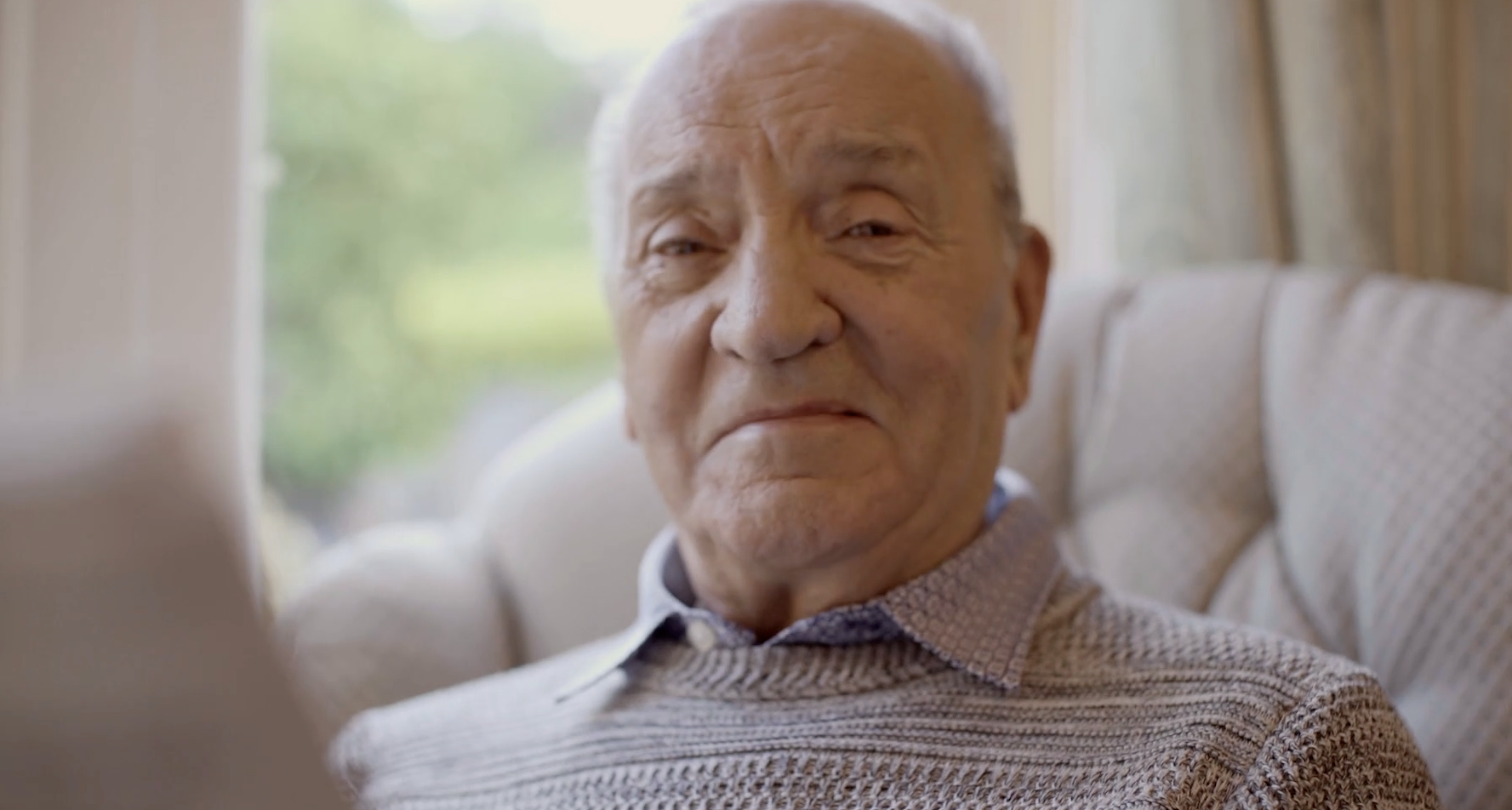
I saw 48 elderly people that day. I’m not sure what the correct term is; elderly, pensioners, senior citizens – i’m sure I will learn this. Three couples, mainly singles. mainly women. All at different stages of life, care, illness, happiness and outlook on life.
These things struck me the most:
Neatness is a sign of good health.
Most people I saw were incredibly house proud. It must be a generational thing. Beds made in such pristine fashion it looked like they’d never been slept in. Hair done and gentlemen clean shaven, wearing cardigans and ties. Must look presentable. The ornaments arranged just so. The crocheted head rest covers on the sofa aligned properly. The kitchen clean, everything put away. These were the people that looked the healthiest and seemed to have the most positive outlook on life.
Untidy is the opposite.
The people who were not – or not able – to look after themselves as well also seemed to have plummeting health. Mr. G in his caravan in the farm looked like he’d been on a bender for several days and a hurricane had been in the caravan. Mark told me it was a good day because he had pants on and there were no chickens in the caravan. His cough was awful. Terrible. Like the soot falling from the chimney as my grandmother used to say. He really should be in hospital. But Mark said he – and others – have signed a form to refuse ambulance care to the hospital. A futile stance of denial as the body weakens and the mind cannot comprehend or does not want to. A last stiff upper lip moment. But to what end? To wheeze and choke continually in a filthy, cold caravan?
Where Mr. G was at one end of the spectrum, you could see the untidiness in others too. One of the first ladies we visited had a garden so overgrown that she basically said she’d given up. You could see her hoarding newspapers, free supplements, post, washing up, rubbish in the kitchen. The mannerisms and tone of someone who knows they are moving to the last stages of their life. And eyes raw from the effects of macular degeneration that will cruelly deprive her of vision in these last years.
Christmas
With one exception, the reaction to the Christmas flyer was a negative one. Not for the food – they like the food. Love it. But the notion of Christmas, a reminder of another year. Most also deployed the gallows humour of ‘If i make it to Christmas this year…”
Christmas is a time of families, celebration, joy. When you look at these people, generally it seems they have little family and little visits by them, not many things to celebrate, little joy and while they have all the time in the world in the day, they fear they have little time at all. Christmas becomes a reminder of the good times they used to have. Or a day when they will, figuratively or literally, wheeled in and then almost as quickly wheeled out again. Or left to ‘celebrate’ on their own.
Loneliness
For some, Mark was the first person they had seen in days. I joined Mark on a Tuesday, one person had not seen a living soul after Friday evening the week before. The isolation must be crushing. Only the radio and the television for companionship. Jigsaw puzzles half-finished. The ones still with their partners, their soul mates – the lucky ones. Even when you see that partner fading before your eyes. Or unable to recognise your face or the room you have spent countless years in. At least there is somebody to talk to. The loneliness seemed to manifest in two ways: those that were so happy to see someone and those that made you feel quite unwelcome with barely a grunt of recognition. One lady greeted Mark with outstretched arms and went if for a full embrace. #awkward.
Routine
Routine is important. The daily routine is largely the same. But the Wiltshire delivery is timed. They expect it. They sit waiting, peering from behind the net curtains for the white van with the delicious meal on the side. Garages left open at the allocated time. Or a little teasing if you are ‘late’. The 5 – 10 minutes is a fleeting moment in a day of 48 deliveries but a significant moment when there is little of other significance happening.
Routine of who they see is also important. The reassurance of seeing the same face every week. The familiar interplay of welcome, update, au revoir and occasionally banter. Every single one of the repeat customers asked where Ed/Eddy was despite him telling them he was going to be on holiday for two weeks.
Tea
If there is one routine and constant among every person it is tea. No matter the health, outlook, spritely-ness or curmudgeon, always tea. Always in a china cup, with saucer and spoon for sugar. And lots of it.
Acceptance
In my life I have largely been fortunate to avoid the emotions of seeing a slow death. The cruelty of the ageing process. My paternal grandparents died when I was relatively young and I recall only seeing my mother’s mother in her hospital bed in Salisbury Hospital after one more fall that broke her hip and leg. At under 5 feet she was always a small woman but she looked even more tiny. Shrunken, frail, skeletal in that hospital bed. Doll-like porcelain, thin skin and white hair that seemed to glisten even in the yellowing fluorescence. I recall holding her hand and just saying ‘I love you’. She couldn’t answer back. That was the last time I saw her. My parents somehow managed to shield my grandfather’s demise into dementia that brought much humour with him stuffing tea towels and money down the toilet to surprising force and physical violence from a septuagenarian that ended with him in a secure nursing home. I am just starting to see the first elements of ageing with my mother and perversely feel fortunate that my father had a sudden, unexpected heart attack thus avoiding this phase of life. Brought more into focus by his best friend now suffering the effects of a stroke that was not able to be treated within the crucial 4 hours. While his fight continues, I was faced with some whose fight is fought.
Of Mrs. K who was permanently connected to gas. Who had accepted that there was nothing more that could be done for her, was allowed home from hospital and was literally waiting to not wake up one day. She accepted it with good grace but it was highly emotional. For Mark, this is a daily occurrence and he rationalised it by saying you need to have a level of emotional detachment, to be professional. But admitted that it’s difficult to know that you go to a room in retirement home knowing that someone you used to deliver food to lived there before but has passed away. Or when the orders stop coming in.
Failure
The body fails as it ages. The zimmer frames help movement but the fingers and thumbs just don’t work with the same level of dexterity that they used to. Eyes fail, hearing fails. There was a lovey Fawlty Towers moment when we entered one room to find an elderly lady staring at us open mouthed with a slightly alarmed look as Mark literally bellowed at her, pointing at his badge and showing the food. At which point she put her hearing aid in and normality resumed.
Falling down is seemingly par of the course too with one chap sporting a cut and an oversize plaster above his right eye that was more suited to a city centre A&E department after a Friday night. In a pronounced Dorset accent, he told us that he had lost about 4 stone in the last month as he had an emergency operation that without it, he would be dead within a week and with it, he only had a 50/50 chance of survival. He took the surgery route and is now facing a daily battle. Weakened by the brutal surgery, his clothes are several sizes too big and he has been left frail and gaunt; leading to the fall in his driveway where skull met pavement. But even with this setbacks, he had a great sense of humour and positivity. You wanted to spend time with him, help him, go beyond. Go to the local charity shop and buy a medium suit for him rather than the extra large that now swamped him in a tragic-comedic way.
Triggers
It is moments like this that trigger the need for Wiltshire Farm Foods. Needing the benefits either because of ill health, being unable to cook properly or being advised by healthcare professionals or more often it seems, by family who know that supermarket ready meals are nutritional poor. Reluctance or even refusal is a common starting point – “I don’t need that, I can look after myself”… another refusal to admit that help may be required. But it’s a help that is not intrusive or demeaning. A help that still enables independence. Perhaps Wiltshire also signifies some level of hope too?
Mark said that the ‘Ronnie’ campaign brought in a good 15 plus newcomers every day. ‘Fern’ has also increased the number of customers but they are noticeably younger; trying the product a few times maybe mentally preparing themselves and then they go away for a bit, to return then they need it.
Daughters
The main instigator in persuading the customer to try Wiltshire is typically the daughter. or even the daughter in law. It’s very rare the conversation includes the son. “Because we’re all shit” as Mark elegantly put it. We’re just repressed when it comes to emotions and try not to get involved but likely feel terrible guilt but also tremendous relief that your sister or wife or other close female relative has taken the leading role. The caring gene is stronger in the female; or at least they have the gumption to do something.
Downsizing
A strange rite of passage where we spend large periods of life aiming for bigger homes only to feel the are too big when we get old and downsize to make it manageable. Desiring the bungalow because you can no longer go upstairs. Or there is the ‘home.’ One of the surprising but obvious in hindsight requirements of downsizing is space. Particularly space for food. Where we enjoy or full size larder fridges and matching freezers, the downsized elderly often have a small fridge, with even smaller freezer compartment. Consequently they cannot store a large amount of food. And then suddenly the weekly Wiltshire Farm Foods delivery makes sense. I’m sure they may like to bulk order, and some with their own homes and larger freezers do, but for most the weekly delivery is a necessity because of space. Plus it also fosters the regularity of human connection and reinforces the personal nature of the brand.
Trust
I was truly amazed at the levels of trust. Knocking and opening doors and walking in. Leaving food in freezers. Cheques completely blank save for a signature. I was conflicted with this. On the one hand it’s a sign that there is complete trust with this brand. On the other, an openness that could leave these people open to other less scrupulous people. I had assumed there would be Fort Knox level security in retirement flats only to see you just need to press the trade buzzer and you’re in, straight into the corridors and able to open most doors with no effort.
Recognition
One thing that felt could be beneficial to help with the above and the diminishing mental faculty could be personalised photos of drivers and expected delivery times. Information that reminds the customer who their driver is, what their name is, what they look like and what day and time they come. And a space for updating with a temporary change to accommodate for holidays.
Beige
Along with tea, there was another constant. Beige. And many variations thereof. Carpets, furniture, clothing, ambience. Beige. A colour that is both staunchly stoic, quiet, formal and informal all at the same time, classic and reserved. A little like our customers.
I left feeling illuminated, humbled but also very emotionally challenged. I think I’m starting to understand a little more. One trip doesn’t make me an expert. But it’s opened my eyes to the situations, the people and the challenges.
//
Eventually we pitched, won, wrote, directed and produced with the team at Kream a new direction for the brand, away from celebrity endorsements and casting real people for four 30s DRTV commercials that captured their love of good food and the love of life. We called it ‘Good Mood Food’. It reversed the sales decline and set Wiltshire Farm Foods on to the trajectory of success they still enjoy today.

