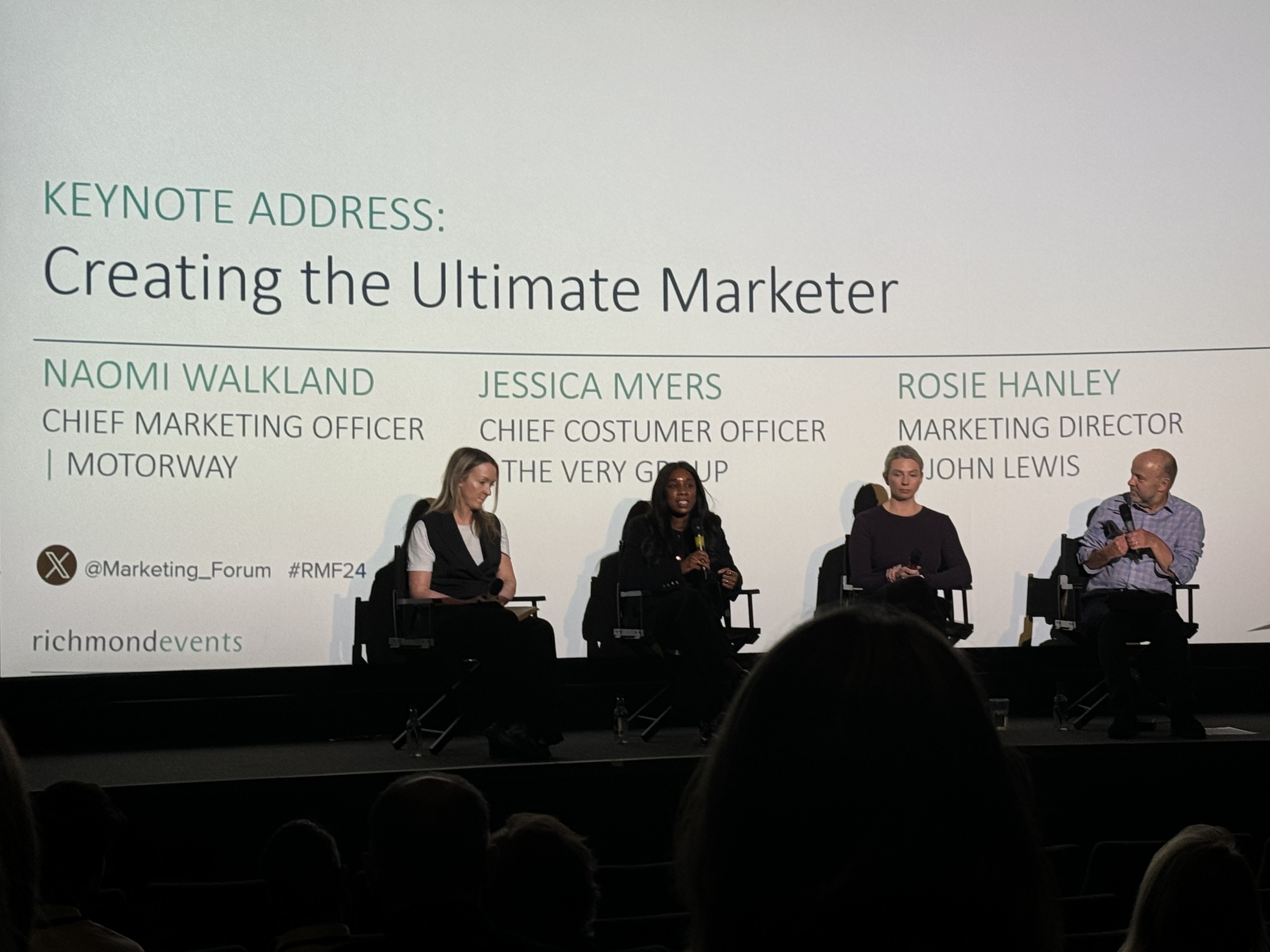
The Richmond Marketing Forum in London recently kicked off with a fabulous keynote featuring Naomi Walkland, CMO of Motorway, Jessica Myers, Chief Customer Officer of The Very Group and Rosie Hanley, Marketing Director at John Lewis.
Having been surrround-sounded by political debates in the media where debate has been re-framed as shouty, aggressive, finger-pointing, talking over one another and landing the same point louder and louder even knowing the point may be incorrect or thin at best, this discussion was compelling, coherent and incisive with answers being full, open, honest and blessedly interruption free – hat tip to Martin George for compère duties.
Some clear themes and thoughts that resonated:
The CMO sits at the intersection of Customer, Creativity and Commercial.
All three made the very important but often overlooked point that to be taken credibly, marketing has to understand how the business makes money. Otherwise you’re just bracketed as the colouring-in department. Understanding the levers and the growth opportunities not only propels the marketing function but enables you to engage credibly with the C-suite peers, particularly the CFO. Reference the recent discussions from McDonald’s on this important alliance. https://fortune.com/2024/06/18/mcdonalds-cfo-cmo-working-together-c-suite-leadership/#
Being the customer champion requires you to deeply understand your customer, their journeys with you and where the opportunities for growth are.
This point rolled into a really interesting discussion about bringing cross-functional teams together. In the newly created Chief Customer Officer role, The Very Group have brought together over 200 people across brands customer proposition, partnerships, data, performance marketing creative studio, social and consumer PR. This enterprise-led approach is an attempt to break down the silos and enable access to information, people and thoughts. It drives improved alignment, understanding and impact. I recall writing about this back in time and the silo effect (https://bluurb.wordpress.com/2011/09/15/the-networked-business-of-the-future/)
“Because the silo model organisation inhibits growth. Of course you can’t break down all the barriers. That would cause chaos. Or an ad agency as we tend to see it. No, you need to become more porous. Demilitarize the silos. Fundamentally sharing the data reserves. But harnessing it and mining it for actionable insights. Not just pretty charts. And it can work.”
It’s still an inhibitor that data on customers is held in one place and the ability to unlock it is in another, often not able to communicate effectively. It will be interesting to see if others follow this enterprise-led alignment.
Creativity follows deeply understanding your customer; their needs, their pain points. While working with creative teams – in-house or agency – a key theme was to create the environment for creativity to thrive. Openness, curiosity and making space for trying new things.
Inevitably this led to a discussion around AI. While there is much hype, it was clear the general tone was that it may well take over low cognitive functions and tasks, improve efficiencies, but there was general skepticism of it replacing humans or indeed marketing entirely. When you see the early results of it in the wild across search, chatbots (just google Ford dealership AI chatbot story) you can see why the sceptism exists. A side conversation with a delegate focussed very much on the regulatory issues and trust, a live example being the blowback Adobe are currently receiving when they assumed that people would be OK with any content they share on their platforms being used to train their AI. Similarly with Meta receiving much negativity on their awful opt-out-but-you’ve-already-kinda-opted-in-and-we’ll-it-very-very-difficult-for-you-to-object-hey-we-probably-won’t-even-get-back-to-you approach. At time of writing I am yet to hear if they will uphold my request or just ignore it for months and use my data in the interim.
The other truly interesting conversation was about coaching. While all had very good points to make around this and the difference it has made in their careers, Naomi’s re-framing and clarity was very insightful around the differences between often-confused language:
Coaching – unlocking things you don’t see yourself
Mentorship – conversation, advice, access
Sponsorship – creating the lane.
All have benefitted from people who have supported, nurtured but importantly created the lanes for them to achieve.
Another fascinating insight was that despite the temptation of the ever-widening roles and remit is to be truly focussed, avoid the distractions. Setting boundaries is key and over-achieving on the things that matter, not everything. Boundaries are also true in the work-life balance. It’s OK to not be always-on. Trust your team.
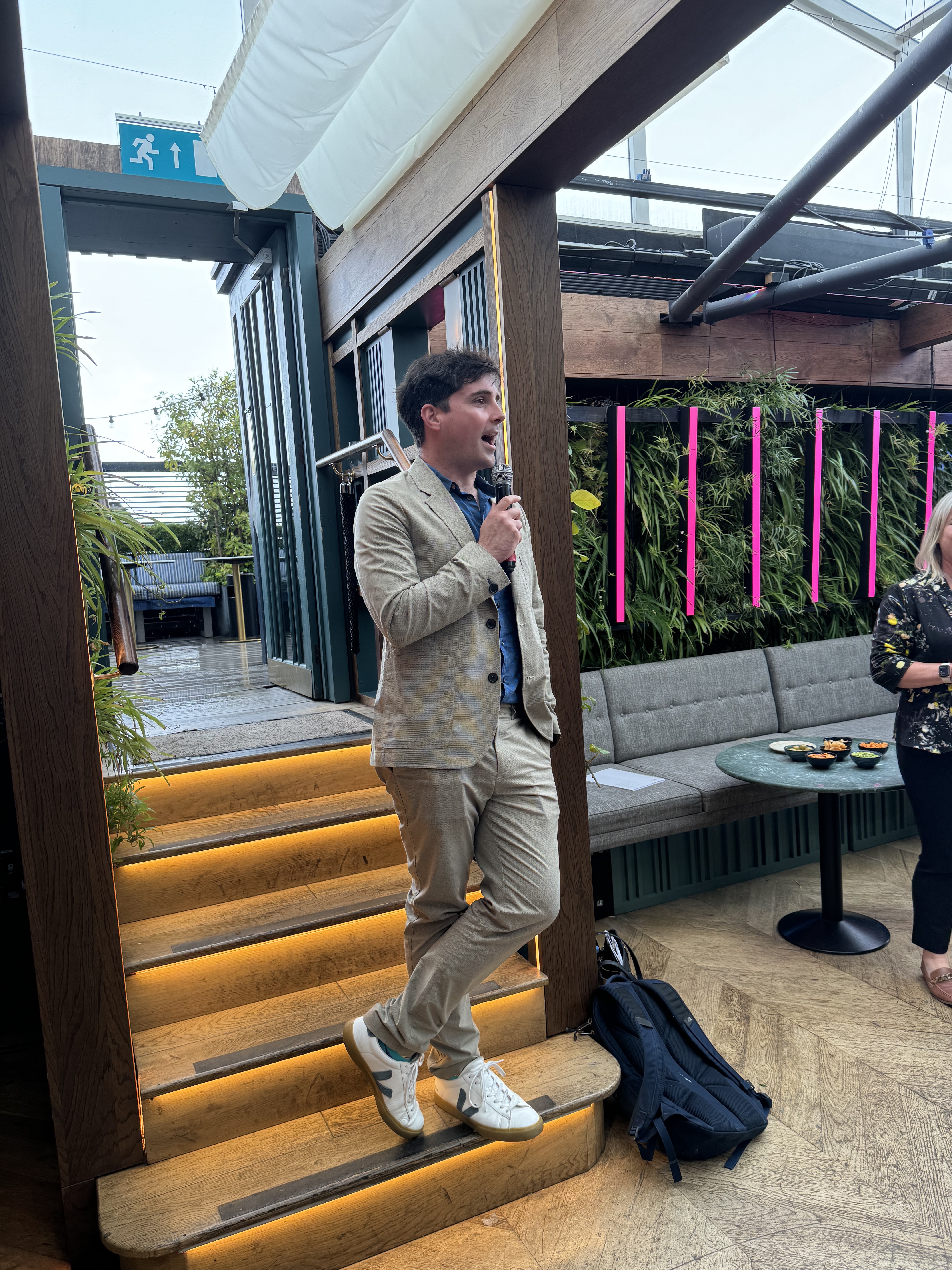
Thanks to the Richmond team for a great event and for the fabulous wine tasting in the evening with Tom Surgey.